Heroin three times a day – and still back to a normal life
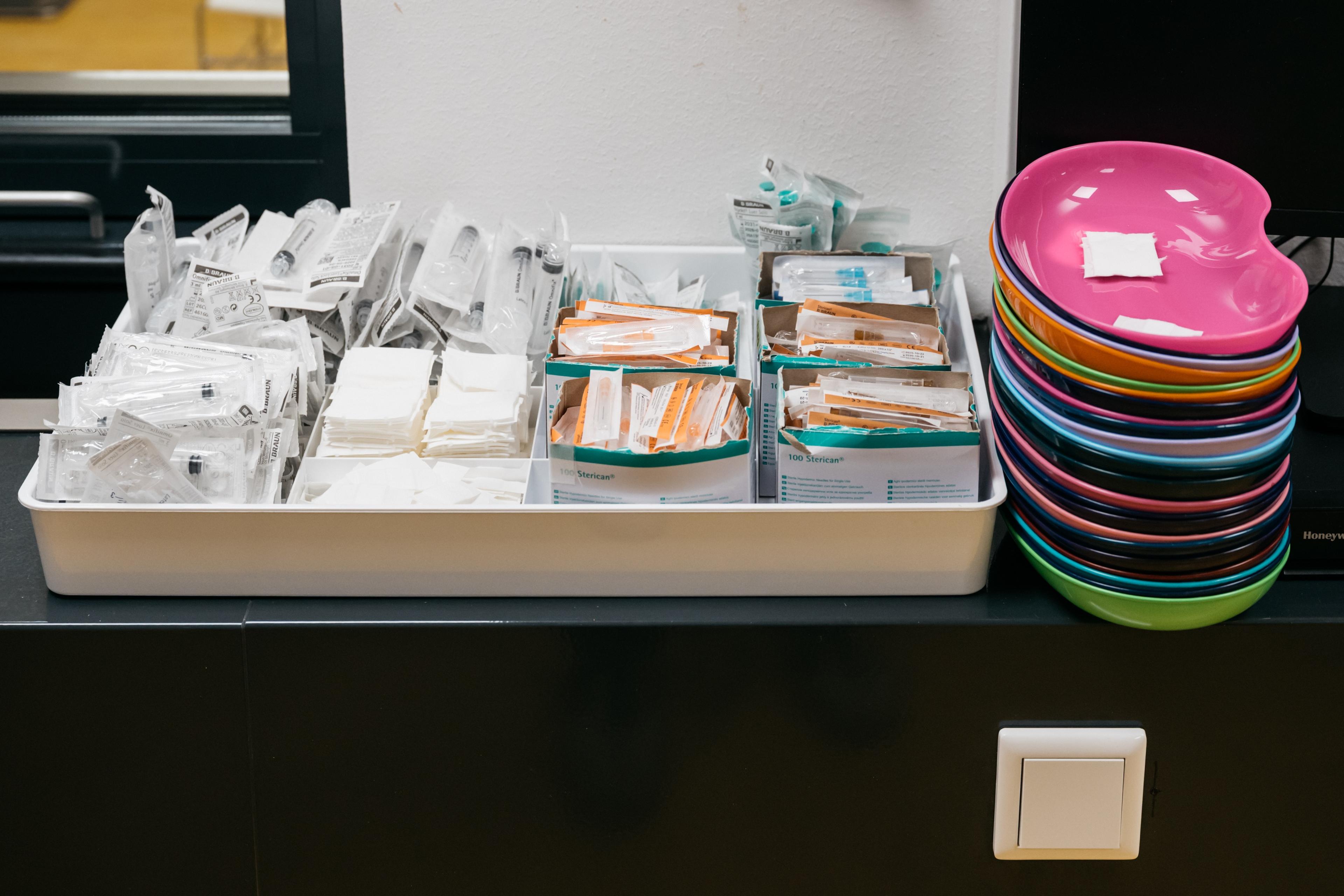

Photo by Daniel Sadrowski
By Madelin Minutella
Translated from German via Translators Without Borders
- Lived experience

It’s 11:45am. Things are getting busy at the MVZ on Nordmarkt. Inside, staff are preparing for the day’s second peak period, as the diamorphine clinic opens its doors at noon. The first patients are already waiting outside the entrance. Some are chatting, while others stand quietly, repeatedly checking the time. Klaus is among them. The 54-year-old from Dortmund leans against the wall. He’s in a hurry because he has to be at work on time.
He has been addicted to heroin since the age of 14. A naive mistake that he made in his teens has shaped his life for more than 40 years. Hospital stays, treatment programmes, attempts at abstinence and, finally, methadone substitution therapy did not provide a lasting solution.
Klaus now visits the clinic three times per day. There, he receives diamorphine: pharmaceutical-grade heroin. It is an alternative to conventional opioid substitution therapy. “With methadone, the withdrawal symptoms disappear, but the psychological craving is still there. Since I started taking diamorphine, my quality of life has improved significantly. Mentally and physically, things could be better, but it’s okay.”
Originally, heroin was used for pain relief and to treat coughs, until it became clear that the drug has a particularly high potential for dependence. However, today’s “street heroin” has little in common with pharmaceutical heroin. Furthermore, its exact composition cannot be reliably determined. Cutting agents alter the drug’s effects and make dosing unpredictable. Withdrawal is also extremely difficult for those affected by addiction: chills, a rapid heartbeat, gastrointestinal problems and severe pain may occur, alongside psychological symptoms such as restlessness, anxiety and psychotic episodes. Symptoms can begin just a few hours after the last use.
For people with long-term addiction, this can lead to a vicious circle: the next hit is no longer taken just for the high, but increasingly to stave off withdrawal. Because the distress experienced by people with addiction can be almost unbearable, relapse is highly likely. For this reason, addiction specialists advise against “cold turkey” withdrawal without therapeutic and medical support.
For years, this cycle left Klaus living a life in which obtaining the drug dominated his thoughts. “Before, I spent my time stealing. My mind was always on high alert because I had to get hold of drugs and money, or I was in withdrawal. Now I don’t spend any time on that anymore. I can progress in my career, and I’ve left the drug scene behind.”
Heroin under medical supervision
Diamorphine is an option for people who have not responded sufficiently to other addiction treatments. The treatment aims to improve health, reduce the use of illegal drugs, and promote social integration.
For Michael Gierse, managing director of the MVZ and drug support organisation PUR, abstinence is not the only measure of successful treatment. “Abstinence is desirable, and we have already referred patients to long-term treatment programmes and supported them through detoxification. There are also cases where patients return to conventional substitution therapy. But if abstinence were our only goal, addiction services simply wouldn’t work.”
At the MVZ, the use of diamorphine is strictly supervised. At reception, patients are welcomed by medical assistant Melanie Balzer-Wehner. The patient’s health insurance card is scanned, followed by an alcohol test, before they proceed to the consumption room. Patients self-administer diamorphine at small tables. Staff monitor the procedure from behind a glass partition. After the injection, the area is disinfected, the empty syringe is shown to staff and then disposed of. Patients must then remain at the clinic for a while until staff give them permission to leave. Outside, they return to their daily lives, heading to work, going home to their families, or seeking support services if they are experiencing homelessness.
Unlike injecting in a secluded corner outdoors, patients here have medical supervision. There is sterile injecting equipment, a controlled environment and trained staff who can intervene in an emergency. However, such incidents have been rare in the year since the clinic opened, says managing director Gierse. In addition, diamorphine is 100 per cent pure, whereas street heroin has a purity of only around 10 to 20 per cent.
What makes the clinic different from a drug dealer?
Dr Ulrike Schmallenbach, the treating physician, explains the difference: “Street heroin poses a risk because it may be mixed with synthetic opioids such as nitazenes. It can quickly prove fatal because its composition is unknown, making the dose unpredictable. Nitazenes are many times more potent. Dealers want to keep their customers.”
At the clinic, however, doctors determine the dose. Since all patients are dependent on more than one substance, they are tested for alcohol and drugs because the concurrent use of different substances must be taken into account when determining the correct dose. “What distinguishes the clinic from a drug dealer is the treatment of patients’ other health problems,” jokes Schmallenbach. “We often see heart disease, liver infections and hepatitis. We also treat chronic wounds and perform blood tests.” In addition to their heroin addiction, patients often have a range of other health and social issues. General medical care is therefore an essential part of treatment.
Approximately 50 patients are currently receiving methadone or diamorphine substitution therapy at the MVZ. The facility has capacity for up to 80 patients. Melanie Balzer-Wehner sees every day that addiction is not confined to particular social groups. “The patients come from all walks of life,” she says.
What they all have in common is how long they have been addicted. Many have been addicted for years or even decades. However, despite their different backgrounds and life circumstances, they all experience social stigma. “People with addiction are often tarred with the same brush,” says Balzer-Wehner. She only changed her own views after meeting a man experiencing homelessness with an addiction. “Hardly anyone wants to work in this field. People with addiction are considered the dregs of society. But once you explain why people become addicted, they understand.”
Today, a large part of her job involves listening. At the clinic, she has time for her patients – something that she lacked when working in elderly care. Sometimes, however, she hears stories that are hard to listen to. For example, dealers who exploit the agony of withdrawal to force drug users into prostitution. That’s exactly why personal contact is so important. Patients need support to find the strength for repeated attempts at treatment, especially as many no longer have contact with their families. “Some even describe us as their family. It’s both heartening and sad.”
More than “prescription heroin”
“Prescription heroin” became a common headline. It sounds provocative and initially gives the impression that the government or the healthcare system is supplying people with heroin, thereby perpetuating their addiction. However, this treatment takes a different approach: it is intended to reduce the health and social harms of addiction.
This has implications for society as a whole, because someone who attends the clinic three times per day uses illicit drugs three times less often. This weakens the illicit drug market. This can also reduce acquisitive crime, begging and other harms associated with illicit drug use. Infectious diseases such as hepatitis and HIV, as well as hospital admissions, can also be reduced or avoided.
However, the eligibility criteria for diamorphine treatment are strict. Among other requirements, patients must have reached the minimum eligible age and previously undergone other addiction treatments. These include conventional substitution treatment, abstinence-based treatment programmes and medically supervised detoxification treatment.
Gierse says that Dortmund compares favourably with other cities when it comes to substitution treatment services. In total, almost 2,000 patients are receiving treatment across the Dortmund area, including at GP practices.
The wide range of services is intended to reduce barriers to treatment and help to ensure that people with addiction receive medical care without being further stigmatised. “But addiction medicine would be inconceivable without social work,” says Gierse. The outpatient clinic, along with the drug support services DROBS and PUR, forms part of the Medical Social Centre. They work together to provide people with additional support.
Studies evaluating diamorphine treatment show significant improvements in illicit drug use and criminal offending. By the end of the study, almost 90 per cent of participants had stopped using street heroin and crack. By contrast, mental health and social circumstances improved only slightly. Critics see the provision of diamorphine as legitimising heroin use. Addiction support services, by contrast, focus on reducing harm. It is an option for people who are not yet able or willing to undergo detoxification treatment.
Klaus now takes diamorphine three times per day – a significant improvement for him. What may appear to outsiders to be a continuation of his addiction, he sees as an opportunity to break free from the constant need to obtain drugs, the illicit drug market and the persistent fear of the next withdrawal. His life is not free from addiction, but the illness no longer dominates every minute of it. And Klaus has another goal: he wants to make another attempt at abstinence.