Three weeks in, no one has been arrested under MLK Library sleeping ban
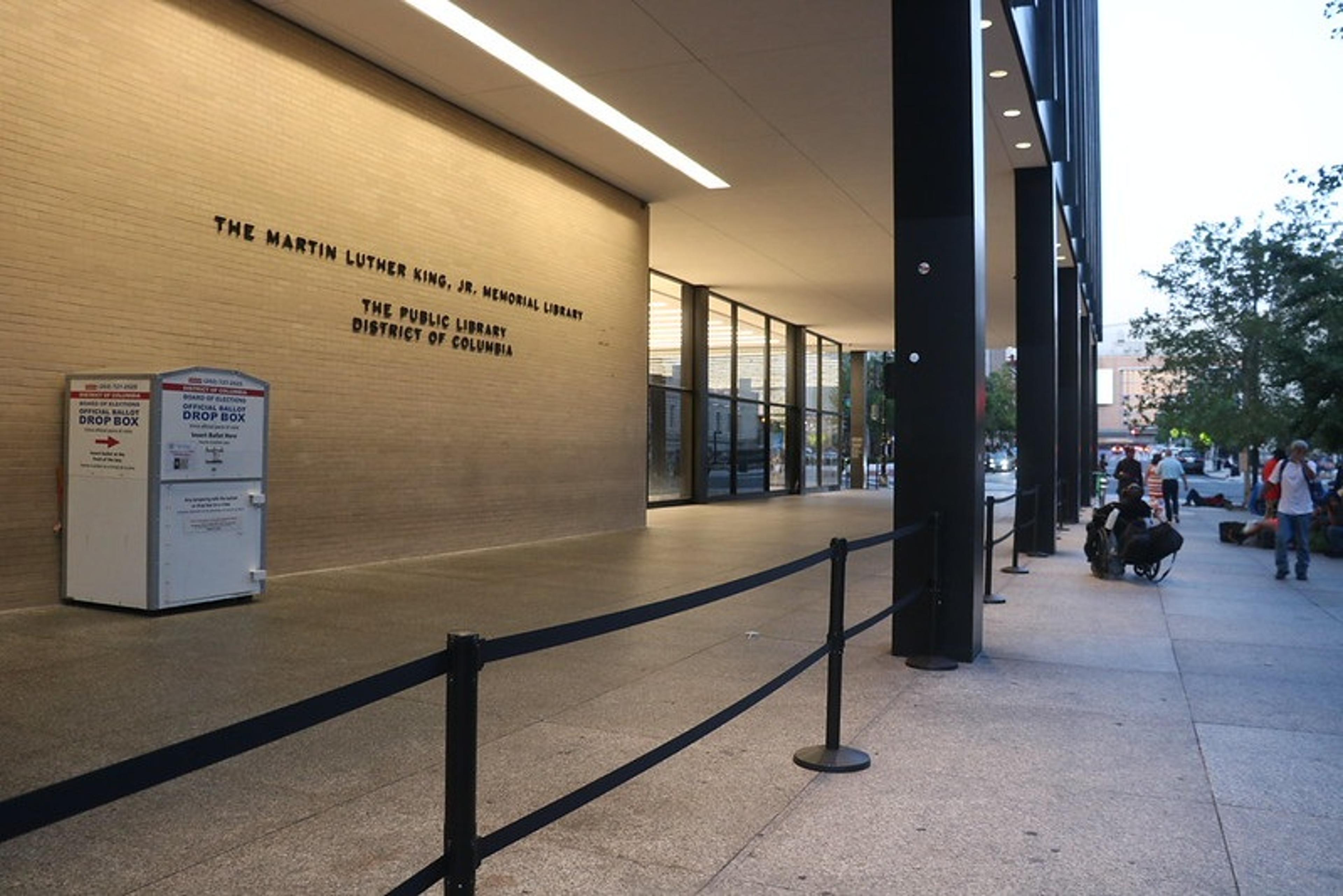

Photo by Chih-Rong Kuo
By Chih-Rong Kuo
- Lived experience

No arrests, warnings, or barring notices have been issued to people experiencing homelessness since Martin Luther King Jr. (MLK) Memorial Library began its 90-day pilot program to enforce regulations preventing people from sleeping outside the building on 6 July.
While sleeping under the library’s loggia, the covered outdoor area belonging to the MLK Library, has long been a violation of the D.C. Public Library (DCPL)’s code of conduct, around 60 people sought shelter and slept under the loggia regularly before the enforcement earlier this summer. It was one of the last places downtown where people experiencing homelessness regularly sought shelter outside.
The library is a centralized location where people can meet caseworkers, connect with services, and receive additional resources. Since the ban, some people who formerly slept under the loggia have relocated, which caseworkers worry will disconnect them from available resources.
The MLK Library began enforcing the sleeping ban to address poor conditions outside the library, according to a DCPL spokesperson.
“The Library is enforcing rules related to the Loggia because conditions in that area have created a barrier to participation at the MLK Library. Enforcement removes that barrier,” the spokesperson wrote. “Complaints from community members about the conditions under the loggia include intimidation, urination, defecation, violence, theft, drug use and litter.”
The enforcement was structured in three phases, beginning with a warning period from 6-19 July, when library police informed people that being on library property after the building was closed could result in bars and arrests. Following this phase, from 20 July 20 to 3 August, library police were authorized to serve bar notices to any person who slept under the loggia and refused to move, prohibiting them from being on DCPL property.
After 3 August, library police could arrest any person who refused to leave the property after being warned or barred for trespassing. However, no arrests, warnings, or bar notices have been issued as of 24 August, according to DCPL.
“From July 6 to July 19 Library police informed people that being on Library property after the building closes could subject them to being barred from the Library,” the DCPL spokesperson wrote. “Since that initial outreach, there has not been a violation of the regulations related to the loggia.”
Police cars and police officers have been stationed under the loggia overnight during the pilot, and a rope barrier blocks off the loggia. In July, people sleeping outside the library told Street Sense that few people had attempted to cross the barrier, which would have resulted in warnings or arrests. Some people have moved closer to the road, outside of the zone the ban applies to and away from the protection of the loggia.
It is unclear whether DCPL plans to continue enforcing the no-sleeping ban after the 90 days, but the results from the pilot are expected to inform DCPL’s decision-making. The pilot is slated to end on 4 October.