All the Empty Rooms

Photos by Lou Bopp
By Charlotte Smith
- News


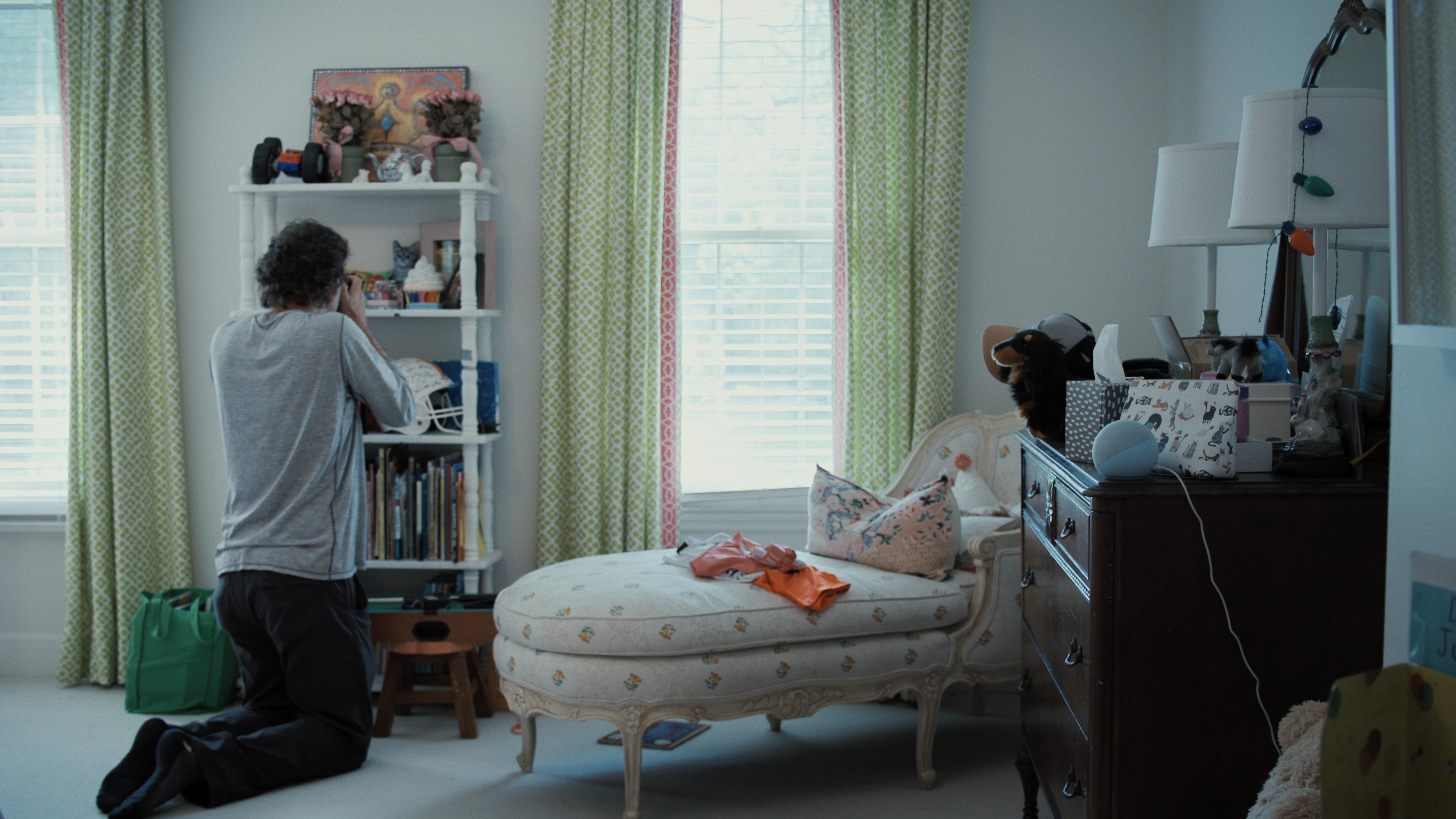
Walking into Dominic’s bedroom, carefully taking off his shoes, photographer Lou Bopp is overwhelmed by the amount of SpongeBob paraphernalia around – toys, posters and figurines on the 14-year-old’s shelves. A picture of the character hangs on the wall, with a message below, written by the young boy’s classmate: “Fly High, Dom”.
The last time Dominic woke up here was back in 2019, when he got dressed, went downstairs, headed to Saugus High School in Santa Clarita, California and never came home.
For years, Bopp has been taking photos of the empty bedrooms of children killed in school shootings in the United States. Around eight years ago, Bopp was about to board a flight when friend and journalist Steve Hartman contacted him with the idea to document these spaces. The journalist is known for feel-good news stories and Bopp for his commercial photography, so the project marked a dramatic tonal shift for both creators.
“I did not think it was going to happen,” Bopp says, “because of the criteria that we needed: first, the children being killed at a school shooting; second, the rooms had to be, for the most part, untouched; and, third, we had to find families that would be willing to open the doors and trust us.”
Ultimately, eight families signed on to the project, with the final four featuring in the short film All the Empty Rooms (2025). It would go on to win the Academy Award for Best Documentary Short at this year’s Oscars. “All eight of them, all the four couples, were there, and it was amazing,” says Bopp, reflecting on the night. “I sat with them, and it was emotional.”
The photographer says that these families were so appreciative of the chance to memorialise their children and create a time capsule of who they were before being taken in one of the cruellest ways imaginable.
“It was so difficult, but in a weird way there was also a lot of hope surrounding this,” Bopp shares, detailing the care and respect that developed between the crew and the families. “There couldn’t have been one element of any weirdness or distrust. It was just a lot of trust and a lot of love.”
That love is evident each time Bopp enters a child’s room – shoes off, no flashy equipment, a calm perusal of the room before he begins taking photos. “I had a number of goals, but one of them was to not to go in with lights – no flashes, no strobes, no hot lights, no tripod. I didn’t touch anything.”
You wouldn’t need to rummage through any of these rooms anyway to see proof of how lived-in and full of life they still are: twinkly lights, makeup, and posters on the walls, as well as more mundane details like baskets of dirty laundry and glasses of water on bedside tables. Some traces feel so intimate, it’s as though the inhabitants might walk back into the room at any moment.
“There are brushes with hair in them and just little details, like the hairbands on the doorknob that one of the children left. You could just see her coming in the door, taking the little hairband out of her hair and putting it on one side.”
US reports consistently find that gun-related violence continues to be the leading cause of death for children and teens in the United States, with students of colour being disproportionately represented. It’s hard to imagine a shift occurring in a country that treats this reality as the status quo – that did not respond after the likes of Columbine and Sandy Hook – but Bopp remains hopeful. “If lawmakers could stand in these bedrooms for a minute, it would speak volumes,” Bopp believes. “I think it would move people. I think it would help to create change.”
All the Empty Rooms puts a face, and a place, to the names of children who are now gone – children like Dominic, who had a loud personality and love of SpongeBob. “At some point there has to be a tipping point,” Bopp insists. “If this film can contribute to that tipping point – great.”