Street Sense vendor Frederic John spotlighted in new documentary

Courtesy of Street Sense Media
By Aubrey Butterfield
- Vendor stories

Jeff Krulik’s landline phone rang again. He had begun to anticipate the voice on the other line as Chris Earnshaw—also known as Frederic John—a DC local who had heard about his short film documentaries. Earnshaw needed Krulik’s help.
“He wanted me to help him make his film called Billy Luck that he wrote the script for,” Krulik said. “And he can nudge you. He won’t let it go.”
Krulik was initially hesitant, as he made his creative intentions clear: he doesn’t do narrative films. But that didn’t stop John from calling. After dozens of attempts and small chats over the phone, he convinced Krulik to meet him at a local restaurant to talk about his screenplay aspirations. Krulik brought his camera.
“I’m so grateful I did,” Krulik said. “He's showing me all these photographs of the vanished landscape. I’ve always been interested in local culture, and, of course, the underbelly, if you will, or the real DC.”
John’s screenplay, Billy Luck, aimed to take viewers around the “underbelly of Washington,” which interested Krulik, the District-grown documentarian. He was more charmed, however, by John’s self-collected and self-created rich history of DC, illustrated through his time under the pseudonym “The Cowboy Poet”. Krulik didn’t know his next move, but he knew he had to keep John on camera, and John knew he needed Krulik’s attention.
“I thought, ‘There’s something going on here.’ And I’m like, ‘Okay, I know he wants me to make narrative films, but I want to work with this guy, and I want to get him kind of going around DC, talking about what he was interested in,’ and that's how we started,” Krulik said. “He moved me, he got me interested in what he was, you know, pretty much all about. Now, I didn't really know him that well, but I took a leap of faith.”
The year 2000 began decades of film following John around DC. Billy Luck came to life—though not how it was intended to. The film follows John and Krulik’s relationship across years of developing Earnshaw’s project, exploring fond memories, frequent bickering, and, eventually, Krulik’s progression into becoming John’s doppelgänger as they battled through similar life challenges of hoarding and gambling.
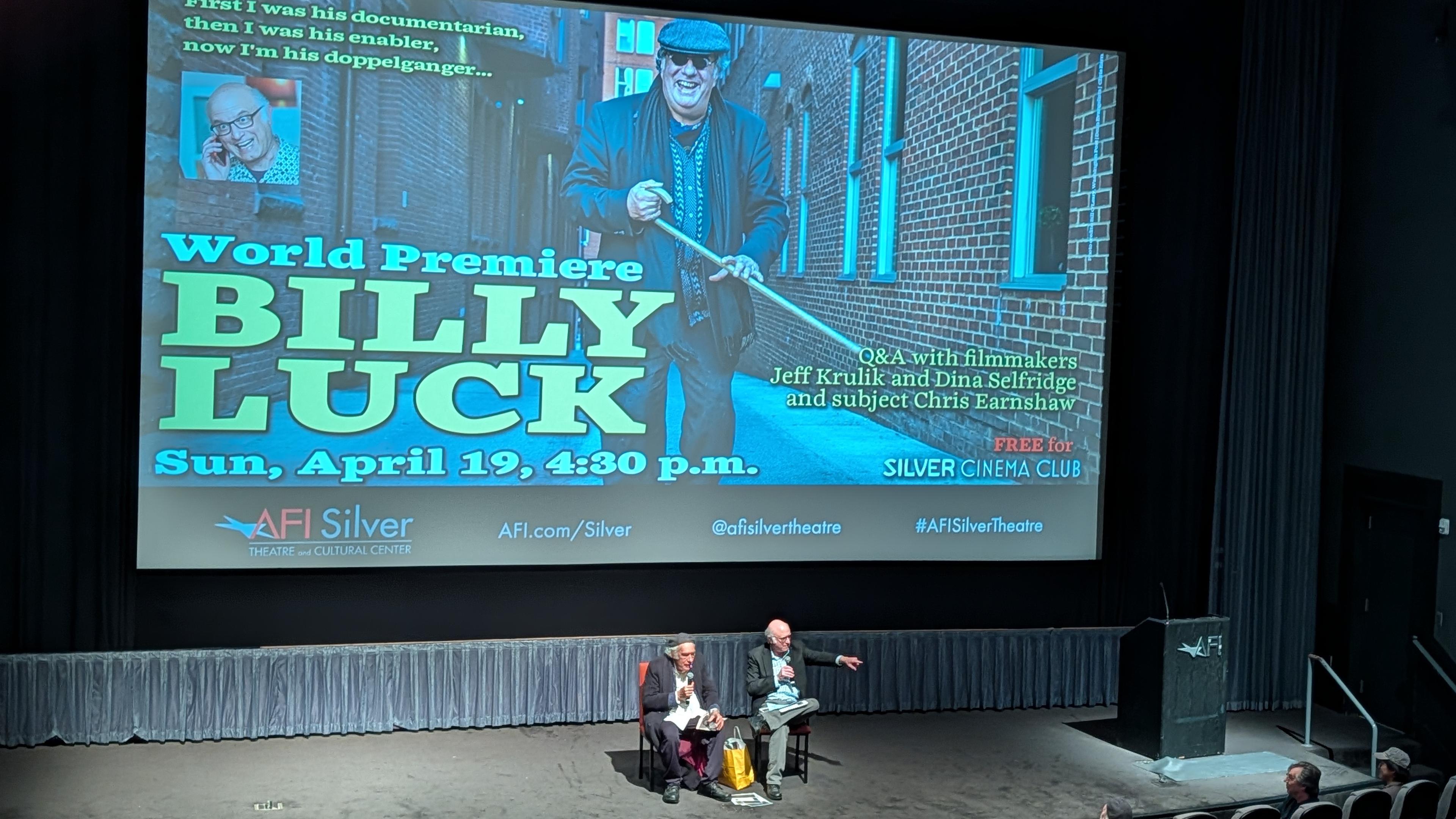
The documentary was screened for the first time at the AFI Silver Theatre and Cultural Center in Silver Springs, Maryland, on 19 April. The project has been years in the making, with Krulik meeting with his co-producers and long-time collaborators Greg DeLiso and Dina Selfridge over Zoom since 2020, 20 years after Krulik began filming. Due to the abundance of footage, Krulik and his editor, Brad Dismukes, edited the 90-minute first draft for months up until runtime, where Krulik stayed in a Virginia hotel for weeks leading up to the premiere.
As a reward for his sacrifices, Krulik has been overwhelmed by support for the film. Friends, colleagues, and fans alike have flooded his social media praising the documentary for its humor, ambition and humanity. Viewers reported feeling connected to John and his struggles and appreciated the vulnerable and open look into his life that Billy Luck provided.
“If you have a lingering, insurmountable problem on your back, you’ll be able to relate to the universal themes of the film,” Davis White, who attended the premiere, wrote on Facebook.
Krulik is particularly drawn to “eccentric” Washingtonians, making John the perfect subject, according to both John and Krulik. His most notable work, “Heavy Metal Parking Lot”, takes a look at Judas Priest fans before his 1986 Landover, Maryland concert, spotlighting oddball fanatics.
Billy Luck opens with a conversation between John and Krulik, in which Krulik becomes frustrated as John struggles to express his talents. This point would become a recurring theme throughout the film, as John navigates how to show the world his work archiving the District.
John’s struggles were often connected to his own battles with bipolar disorder and alcoholism. As a result, he found himself deeply intertwined with horse gambling—a financial challenge for both himself and Krulik that is discussed intently in the film. The film spans from 2000 to the current day and, since the events of the documentary, John has celebrated over three decades of sobriety from drugs and alcohol, and has done personal work regarding his finances.
“I don’t go around beating the drum for, ‘I’m in recovery,’ you know, like some of these big movie actors, you know, trying to get people to come in. I mean, I just try to be an example,” John said. “Because I don't drink anymore, it means I have a better memory, and my personality is more settled, and I care about other people.”
Prior to his focus on photography, John had different plans for his creative endeavors. The documentary covers his time in New York, as he chased acting dreams. He would eventually work at Saturday Night Live and have an iconic cameo in All That Jazz.
Despite DC’s central focus in the film, John emphasized the importance of his experiences in cities like New York, New Orleans and Las Vegas in the shaping of his life. He joined the Screen Actors Guild and became invested in blues bands, taking pictures of his bandmates while learning guitar.
“I just had this love,” John said. “I took good portraits of the bluesmen in black and white with Polaroids, and that was an extension of what I’d done exploring around downtown. Here they were starting to tear down the old city, and I was just enthralled with the photographs of Walker, Evans, you know, and Dorothea Lange, you know, the people who took the pictures in the ’30s, and especially Beatrice Abbott.”
Following his stints across the country, John returned to the District. He would finally find recognition for his photographic work in a 2016 five-page feature in The Washington Post’s Sunday magazine, which showcased “The Polaroids of the cowboy poet” and his journey capturing his hometown. He would wind up contributing to the magazine, referring to himself as a “groupie” of the publication.
“If it wasn’t for The Post magazine, I don't think a lot of people would have seen my pictures,” John said.
This moment became frustrating for Krulik, who felt excluded from the process after his years of work with John. After reflecting on his relationship with John, the documentary culminates in Krulik’s revelation that, over the course of decades, enabling John, he has become him. This is most prevalent through shots of John and Krulik’s respective storage units and efforts to expand their art to the public.
The film is currently incomplete and is being prepared for another editing round. Krulik plans on continuing to develop the film, including visual fixes, complete end credits, and more footage of his time with John. He continues to be intimately involved with the production of the film, drawing on past footage and occasionally recording more of John to finish storylines.
Today, John lives in the District with his partner and works as a vendor at Street Sense Media. He enjoys watching writers and photographers find their footing at the publication and continues to express his love for his hometown through his work. He remains in regular contact with Krulik and is still passionate about Billy Luck and other creative pursuits.
Parts of his screenplay have been published in Street Sense. The plot, he said, was inspired by the “melting pot” of New York Avenue and his affinity for the Skid Row neighborhood. While archiving the buildings through his photographs, he aimed to archive the stories of DC residents in the screenplay.
Though John no longer writes as often, he appreciates the creative freedom that the paper has granted him and other homelessness advocates in getting their words heard.
“[They] would give me a lot of space with my photographs and stuff, but the paper is more of a constituency vehicle now, so that everybody gets a chance,” John said. “I don’t have to let people know I can write and take pictures, because they know that. So I’m all for giving other people a chance, and especially since I don’t do as much vending as a lot of the other members do.”
As John continues to shape his legacy, Street Sense remains a vital part of his story.
“All of these great people have come to Street Sense, and their memory will be perpetuated because they came to Street Sense,” John said. “Nobody who came to Street Sense ever had their life go downward. It always went upward.”
Krulik is in the process of planning the film’s public distribution. Updates on the status of BILLY LUCK can be found by contacting Krulik at jeff@jeffkrulik.com, or on his Facebook page, https://www.facebook.com/jeff.krulik.